 ENG
ENG
 INA
INA
Strengthening Academic Governance, Faculty of Marine Sciences and Fisheries Udayana University Holds 2026 Internal Quality Audit (AMI)
 (4).png)
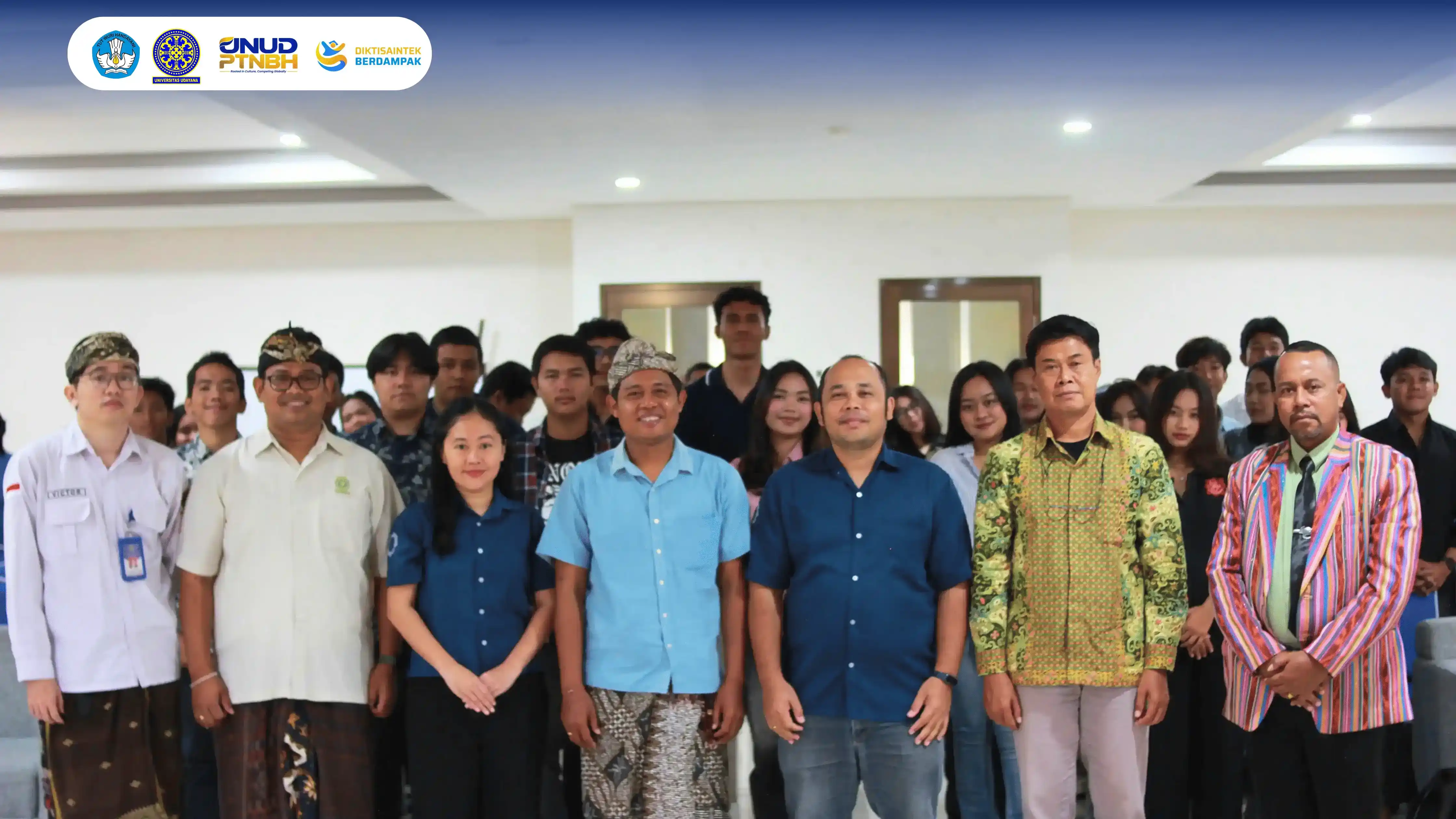
JIMBARAN, September 17, 2026 – The Faculty of Marine Sciences and Fisheries (FKP) at Udayana University reaffirmed its commitment to Good University Governance (GUG) by organizing the 2026 Internal Quality Audit (AMI). This comprehensive institutional evaluation took place on Thursday, September 17, 2026, centered at the Samudera Building, FKP Bukit Jimbaran Campus, involving all study programs within the faculty.
AMI is a crucial instrument in the Internal Quality Assurance System (SPMI), based on the PPEPP cycle (Penetapan, Pelaksanaan, Evaluasi, Pengendalian, dan Peningkatan / Setting, Implementation, Evaluation, Control, and Improvement). The execution of this audit at FKP was systematically designed to verify the alignment between academic activities and Udayana University Quality Standards, while simultaneously identifying potential innovations and areas requiring continuous quality improvement.
Vice Dean I and Acting Vice Dean III of FKP Udayana University, Mr. Pande Gde Sasmita Julyantoro, opened the series of AMI events on behalf of the Dean of FKP, who was unable to attend. In his opening remarks, he emphasized the urgency of AMI as a foundation for enhancing institutional capacity.
To ensure a smooth and in-depth audit process, the AMI execution was organized into two parallel panels starting precisely at 10:00 WITA. The first panel, located in Batur Room 4.4, 4th Floor, focused its evaluation on the Marine Sciences Undergraduate Program (S1) and the Aquatic Resources Management Undergraduate Program (S1). Simultaneously, the second panel, held in the Buyan Room, 2nd Floor, audited the Master’s Program in Marine Sciences (S2) and the Aquaculture Undergraduate Program (S1).
One of the methodological highlights of this year's FKP AMI was the consistent implementation of a cross-audit scheme. This policy requires internal auditors to evaluate study programs outside their home base. This approach has proven effective in minimizing bias, ensuring assessment objectivity, and encouraging the exchange of best practices across study programs.
The audit process involved four auditor teams led by experienced academics:
Group 1: Led by Moh Saifulloh, S.P., M.Sc. (Marine Sciences), auditing the Aquatic Resources Management Study Program.
Group 2: Chaired by Ni Made Ernawati, S.Kel., M.Si. (Aquatic Resources Management), auditing the Marine Sciences Study Program.
Group 3: Led by Endang Wulandari Suryaningtyas, S.Pi., MP. (Aquaculture), auditing the Master’s Program in Marine Sciences.
Group 4: Chaired by Suprabadevi Ayumayasari Saraswati, S.Kel., M.Si. (Aquatic Resources Management), evaluating the Aquaculture Study Program.
The success of AMI 2026 was made possible by the full support and synergy of all internal faculty stakeholders. The event involved Study Program Coordinators, Unit Heads, Laboratory Heads, the Faculty Learning Development and Quality Assurance Unit (UP3M), and the Quality Assurance Implementation Team (TPPM) at the study program level. This active involvement reflects a growing culture of quality within FKP.
The series of AMI activities concluded with a plenary session presenting findings and discussing recommendations. This constructive discussion produced a follow-up blueprint to be implemented incrementally, ensuring that the Faculty of Marine Sciences and Fisheries, Udayana University, continues to move forward in producing competitive graduates and impactful research for the community.
 (3).webp)
UDAYANA UNIVERSITY